
Mulching in Chattanooga, TN
Hardwood, pine, or dyed mulch installed at the right depth — moisture in, weeds out. Spring and fall refresh. Free estimates.
How much does mulching cost in Chattanooga?
Mulching in Chattanooga typically runs $65 to $120 per cubic yard installed, depending on the mulch type, how much bed prep is needed, and access. A typical residential refresh on existing beds lands between $300 and $800 total; full-yard installs with bed shaping, edging, and weed barrier go higher.
Per-cubic-yard pricing installed. Existing-bed prep, edge cutting, and weed barrier billed separately when needed. We always quote in writing first.
How thick should mulch be in Tennessee beds?
2 to 3 inches deep is the right depth for most Chattanooga-area beds. That's enough to suppress weeds and hold moisture through summer without suffocating plant roots.
What we see often: well-meaning homeowners pile mulch 5–6 inches deep against tree trunks ("mulch volcanoes"), which traps moisture against the bark and rots the trunk. We always pull mulch back at least 2 inches from any trunk or plant stem — root flares need to breathe.
Which mulch is best for Chattanooga yards?
Shredded hardwood — the default
The standard for most Chattanooga beds. Affordable, breaks down into the soil over a season or two (which is good for soil health), and the natural brown color reads well against most house colors. Renews to "fresh" with a light spring top-dress.
Pine bark — for acid-lovers
If your beds have azaleas, rhododendrons, hollies, or hydrangeas, pine bark mulch acidifies the soil slightly as it breaks down — exactly what those plants want. Available in shredded form or as nuggets (which last longer but don't lock in moisture as well).
Dyed mulch — when color matters
Black, red, and brown dyed mulches hold their color through the season — natural mulch fades to gray-brown by August. Costs more, and some homeowners prefer the cleaner look. We use kiln-dried, color-fast dyed mulch only — cheap dyed mulch can leach color onto sidewalks and patios.
When's the best time to mulch in Chattanooga?
Late April through early May is the ideal window — after the last frost, before summer heat. Mulching at this time:
- Locks in soil moisture before the dry-summer-stress months (July–August)
- Suppresses weeds before they germinate, not after they've sprouted
- Looks fresh through the high-traffic outdoor months
A second light top-up in early fall (October) refreshes the look heading into winter and adds insulation that protects roots from the freeze-thaw cycles common in Chattanooga winters.
How we install mulch the right way
- Walk the beds — measure square footage and assess existing mulch depth.
- Bed prep — pull weeds, rake old mulch level (we usually leave it; it adds organic matter as it decomposes).
- Edge the beds — sharp spade-cut edges between bed and lawn, which makes the whole yard look clean for very little extra effort.
- Optional: weed barrier — landscape fabric or a thick layer of newspaper under mulch for stubborn weed problems. We discuss this case-by-case; it's not always necessary.
- Apply 2–3 inches of mulch, kept 2 inches back from trunks and stems.
- Cleanup — driveways, walkways, and lawn blown clean before we leave.
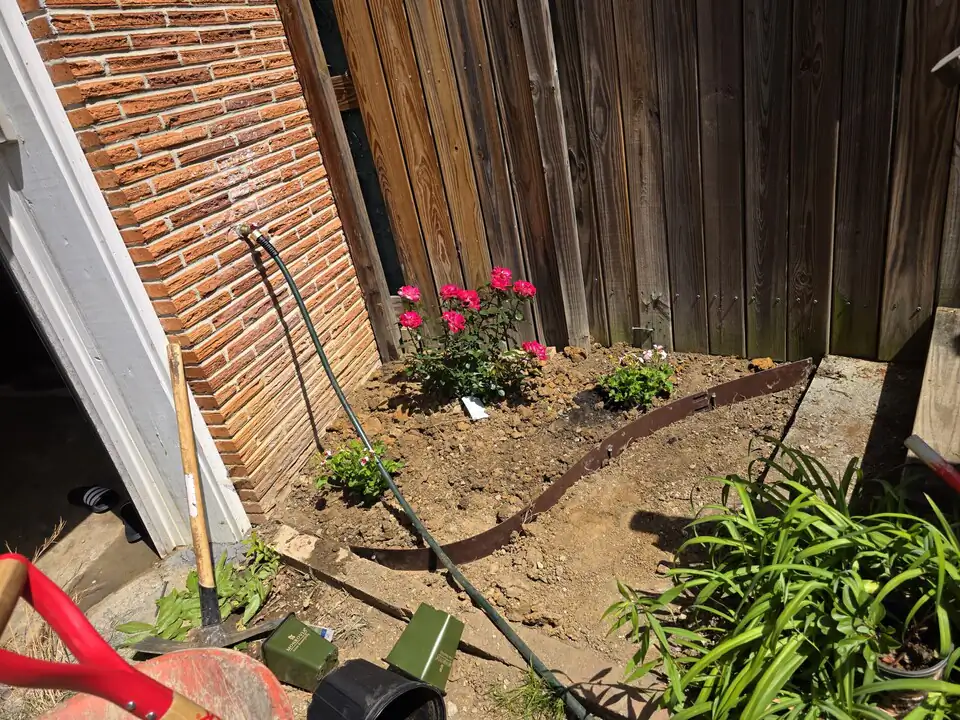
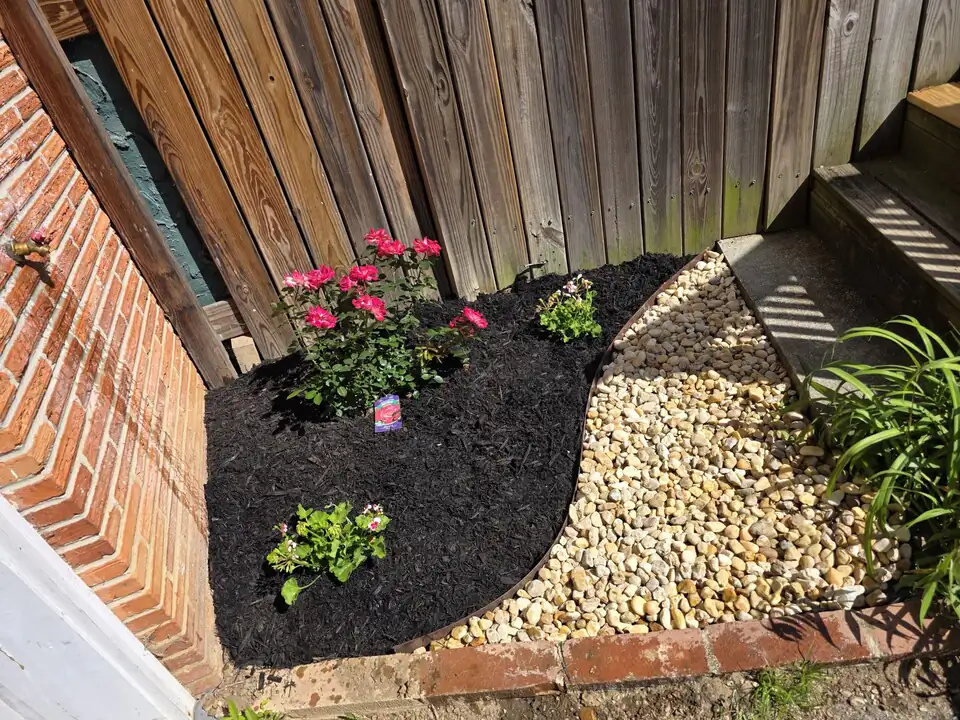
Volume math: One cubic yard of mulch covers roughly 100 square feet at a 3-inch depth, or 160 square feet at 2 inches. A typical home with mulched front beds + foundation strip + tree rings needs 2–4 cubic yards. We always measure on-site before quoting.
What about mulching tree rings?
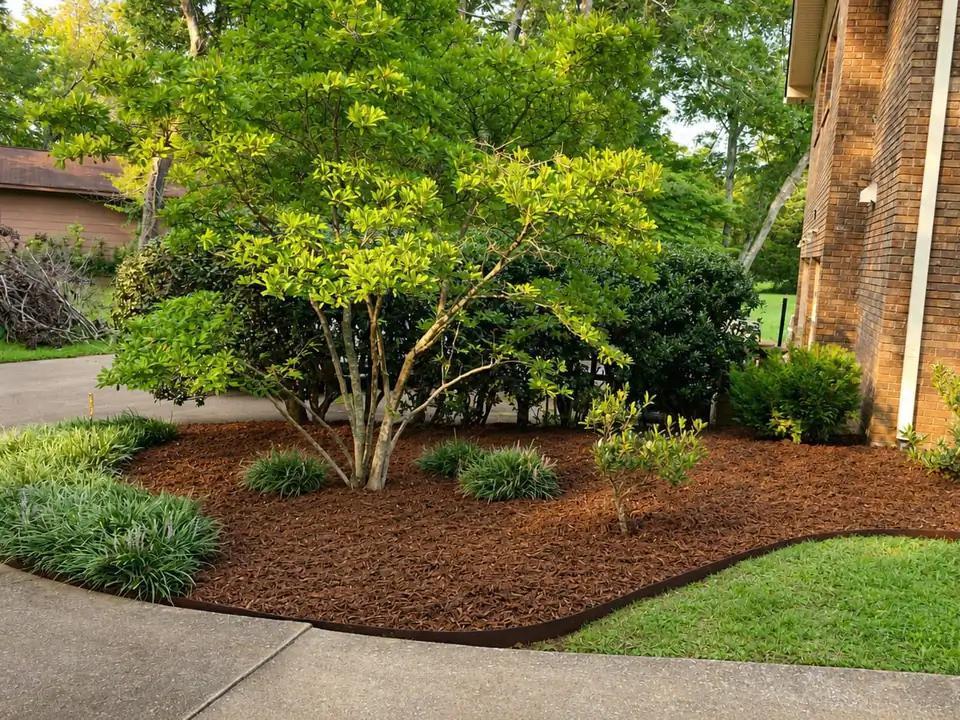
Tree rings are the most-asked-about and most-frequently-done-wrong mulch job. The right way:
- Mulch ring should extend at least 3 feet from the trunk, ideally to the drip line.
- Mulch depth: 2–3 inches inside the ring.
- Pull mulch back from the trunk — at least 2 inches of bare soil around the trunk flare. No mulch volcanoes.
- Edge the ring cleanly so it reads intentional, not "mulch dumped at base of tree."
What's covered in our mulching estimate
- Square footage and cubic-yard volume measured on-site
- Mulch type and source (we use kiln-dried mulch from regional Tennessee yards)
- Bed prep — weed pulling, edging
- Optional: weed barrier installation, bed reshaping
- Total project price — no per-yard upcharges
- Estimated install date once approved
Estimates are free, written, and on-site. We come look at the beds before quoting — bed shape, weed pressure, and access all change the number. Call (423) 645-5256 or request one online.
Related landscaping services in Chattanooga
- Shrub trimming — pair with a mulch refresh for the cleanest possible bed look.
- Spring and fall yard cleanups — full-yard reset before mulching.
- Sod installation — for the lawn around the beds.
- See a recent full-yard project — mulch, shrubs, and more, before and after.
- Areas we serve across Hamilton County.