
Shrub Trimming in Chattanooga, TN
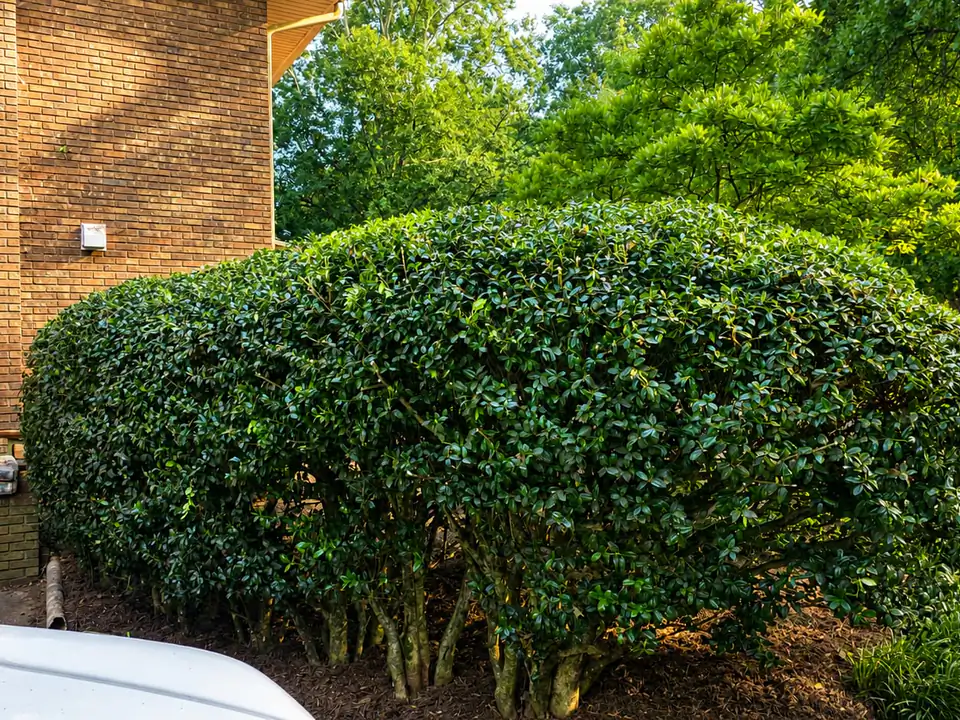
Hedges shaped, overgrowth tamed, deadwood removed — at the right season for the plant. Boxwood, holly, azalea, hydrangea, and everything else in your beds.
How much does shrub trimming cost in Chattanooga?
Shrub trimming in Chattanooga typically runs $25 to $150 per shrub depending on size, condition, and how much pruning is needed. Small foundation shrubs (compact boxwoods, dwarf hollies) sit at the low end. Large overgrown specimens (tall hedges, big azaleas, mature cherry laurels) sit at the high end. A full residential property with 8–12 shrubs and a hedge run usually lands between $300 and $1,500 for a single visit.
Heavy renovation pruning — overgrown shrubs that haven't been touched in years — is quoted separately because it can take 2 or 3 sessions across a year to bring them back without shocking the plant.
When's the best time to trim shrubs in Chattanooga?
Timing depends on the plant. Pruning at the wrong season on a flowering shrub means you remove next year's blooms before they ever appear. Quick pruning calendar for the most common Chattanooga-area shrubs:
Spring-flowering shrubs — prune right after they bloom
These set their flower buds on the previous year's wood. Cut them back as soon as flowers fade so they have all summer to grow new wood for next year:
- Azalea — late April / early May, right after bloom
- Forsythia — March / April, right after the yellow flowers fade
- Lilac — late May, right after bloom
- Oakleaf hydrangea — June, right after flowering
- Spirea (spring-flowering varieties)
- Mock orange
Summer-flowering shrubs — prune in late winter
These bloom on this year's new growth, so cutting them back hard in late winter actually increases bloom volume:
- Panicle hydrangea (Limelight, Vanilla Strawberry, etc.) — February / early March
- Smooth hydrangea (Annabelle) — February / early March
- Butterfly bush — early March (cut back hard, almost to ground)
- Crepe myrtle — February (light shaping, never "crepe murder")
- Roses — February / early March
- Beautyberry — late winter
Evergreen hedges — twice a year
The workhorses of Chattanooga foundation plantings get a major shape in late spring after the first flush of new growth, then a lighter clean-up in mid-to-late summer:
- Boxwood — late May, then again in August
- Holly (varietals: Nellie Stevens, Foster, dwarf yaupon) — late May, then late summer
- Privet — same schedule
- Cherry laurel — late spring
- Japanese yew — late spring
Big-leaf hydrangea — careful
Big-leaf hydrangea (Endless Summer, Nikko Blue, etc.) blooms on a mix of old and new wood. We prune it minimally: deadhead spent flowers and remove obviously dead canes, but we don't cut it back hard. Aggressive pruning on big-leaf hydrangea is the #1 reason for "my hydrangeas don't bloom anymore" complaints.
How we approach shrub trimming
- Walk-through first — we identify each shrub, assess its health, and discuss what you want (more contained vs. natural shape).
- Right tool for each plant — hand pruners for selective cuts, hedge shears for uniform shaping, gas hedge trimmers for long hedge runs, lopping shears for thick canes.
- Start with deadwood removal — every cut, every shrub. Dead branches don't help anyone.
- Follow plant-specific technique — selective thinning cuts on natural-form shrubs, uniform shearing on hedges. We don't shear everything just because it's faster.
- Clean up as we go — clippings tarped, hauled, and removed. Beds and walkways blown clean before we leave.
"Crepe murder" warning: If you've seen crepe myrtles cut back to stubs every winter — that's wrong, even though it's everywhere in the South. Crepe myrtles need light shaping only. We won't do it the bad way even if asked. We'll explain why and recommend correct technique.
Renovation pruning — bringing back overgrown shrubs
Most overgrown shrubs can be saved without replacement, but it takes patience. Our approach to a neglected shrub depends on the species:
Plants that respond well to hard renovation
Boxwood, holly, forsythia, lilac, hydrangea, and azalea can all be cut back hard (sometimes to within 12–18 inches of the ground) and they'll regenerate from old wood. We typically do this in stages over 2–3 seasons rather than all at once.
Plants that won't regenerate from old wood
Most junipers, cedars, arborvitae, and yews cannot be cut back hard — if you trim past the green needle zone into bare brown wood, that section won't grow back. For severely overgrown specimens of these, replacement is usually the answer.
Recurring or one-time?
Most clients fall into one of two patterns:
- Twice-a-year service: spring shape + late-summer clean-up on hedges and main shrubs. Most common pattern for Chattanooga homeowners with active landscapes.
- One-time renovation: bring overgrown beds back to a manageable starting point, then hand them off for the homeowner to maintain or schedule recurring service.
What's covered in our shrub trimming estimate
- Inventory of all shrubs and hedges to be trimmed (with notes per plant)
- Recommended timing if any plants need to be pruned at a different season
- Per-shrub pricing — small shrubs $25, mature/overgrown $150, with everything in between scaled to size and effort
- Hauling and cleanup included
- Renovation plan for any overgrown plants (multi-visit if needed)
Estimates are free, written, and on-site. We come walk the beds before quoting — shrub size and condition matter too much to price blind. Call (423) 645-5256 or request a visit online.
Related landscaping services in Chattanooga
- Mulching — pair with shrub trimming for the cleanest possible bed look.
- Spring and fall yard cleanups.
- Sod installation.
- See a recent full-yard project — before and after photos.
- Areas we serve across Hamilton County.